 Menu
Menu
25 January, 2026
Collaborative venturing in squads
IESE has published an Insight article “Beyond teaming up: how corporate venturing squads work — and where they struggle” Collaborative venturing in Corporate venturing squads (CV squads) is creating multi-corporate alliances where several companies jointly scout, test, or invest in startups to drive innovation. These squads are growing as a strategic model for collaboration — even among competitors — but success depends heavily on governance and execution, not just innovation intent.
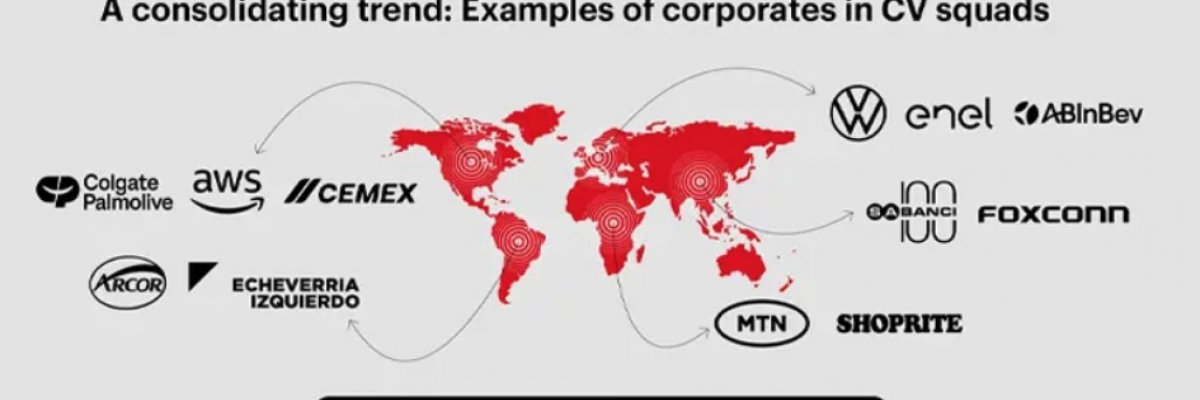
IESE has published an Insight article “Beyond teaming up: how corporate venturing squads work — and where they struggle”
Collaborative venturing in Corporate venturing squads (CV squads) is creating multi-corporate alliances where several companies jointly scout, test, or invest in startups to drive innovation. These squads are growing as a strategic model for collaboration — even among competitors — but success depends heavily on governance and execution, not just innovation intent.
Collaborative venturing in Corporate venturing squads (CV squads) is creating multi-corporate alliances where several companies jointly scout, test, or invest in startups to drive innovation. These squads are growing as a strategic model for collaboration — even among competitors — but success depends heavily on governance and execution, not just innovation intent. (IESE)
Why squads matter:
- CV squads help companies pool resources and access startup deal flow more effectively than acting alone.
- They address complex innovation challenges that single firms can’t solve independently.
- An example is 100+ Accelerator — a squad of major consumer companies working on sustainability solutions across many countries. (IESE)
Key findings from the report:
- Evolution toward maturity:
- Many CV squads aren’t one-off experiments but are persistent and expanding strategic vehicles.
- At least 671 organizations have participated in 116 squads globally. (IESE)
- Governance > innovation:
- Most squads face friction — over 90% report challenges and ~80% face multiple issues.
- The biggest problems are organizational (misaligned partner structures, internal blockers, design mismatches) rather than technical. (IESE)
- Competitor dynamics:
- Squads including competitors encounter more legal/regulatory issues but often have clearer role definitions.
- Noncompetitor squads tend to struggle more with design and resource ambiguity. (IESE)
- Different squad types need different approaches:
- Six squad types (e.g., scouting, joint proofs of concept, co-investment) each have distinct coordination and leadership needs.
- A one-size-fits-all governance model doesn’t work; management must fit the squad’s purpose and structure. (IESE)
- Execution duties:
- Across squads, partners typically divide tasks in four areas: strategic execution, resource allocation, startup engagement, and visibility/dissemination. (IESE)
- The role of the CV manager:
- Nearly all effective squads appoint a dedicated alliance manager.
- The ideal profile varies: visionary leaders for exploratory initiatives, coordinators for execution-heavy squads, and neutral facilitators for competitor groups. (IESE)
Takeaway:
Collaborative venturing is a powerful model for collective innovation. The success relies on structured governance, alignment among partners, and intentional leadership — not just the promise of innovation itself. (IESE)